

How To Boil Corn On The Cob At Home

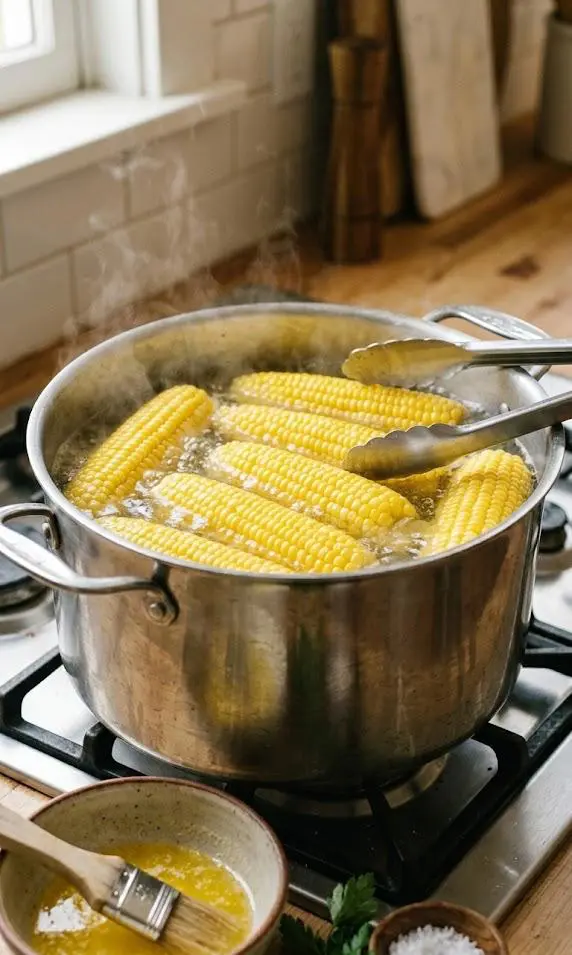
Boiling corn on the cob is one of the easiest and most satisfying ways to enjoy fresh sweet corn. Whether it’s summer barbecue season or a simple weeknight dinner, perfectly boiled corn is juicy, tender, and full of flavor.
In this guide, we’ll walk you through step-by-step instructions, tips for extra sweetness, and some variations to elevate your corn game.
Choosing the Right Corn
Before you start boiling, picking the right corn is essential. Look for:
-
Freshness: Kernels should be plump and firm.
-
Husk: Bright green and tightly wrapped, indicating freshness.
-
Silk: Golden and slightly sticky. Avoid dark or dried silk.
-
Timing: Corn is sweetest when eaten the same day it’s harvested.
Fresh corn makes a huge difference in flavor and texture after boiling.
Ingredients Needed
- 4 to 6 ears of fresh corn
- Water (enough to cover the corn)
- Optional: Salt, sugar, butter, or herbs for seasoning
Pro Tip: Some people add a little sugar to the water to enhance the corn’s natural sweetness. Avoid adding salt before boiling, as it can toughen the kernels.
Step-by-Step Guide to Boiling Corn on the Cob
Step 1: Prepare the Corn
-
Remove the husks and silk from each ear. Be thorough - tiny strands of silk can stick to kernels if not removed.
-
Rinse each ear under cold running water to clean off remaining silk and dirt.
-
Trim the stem ends if needed so the corn fits comfortably in your pot.
Step 2: Boil Water
-
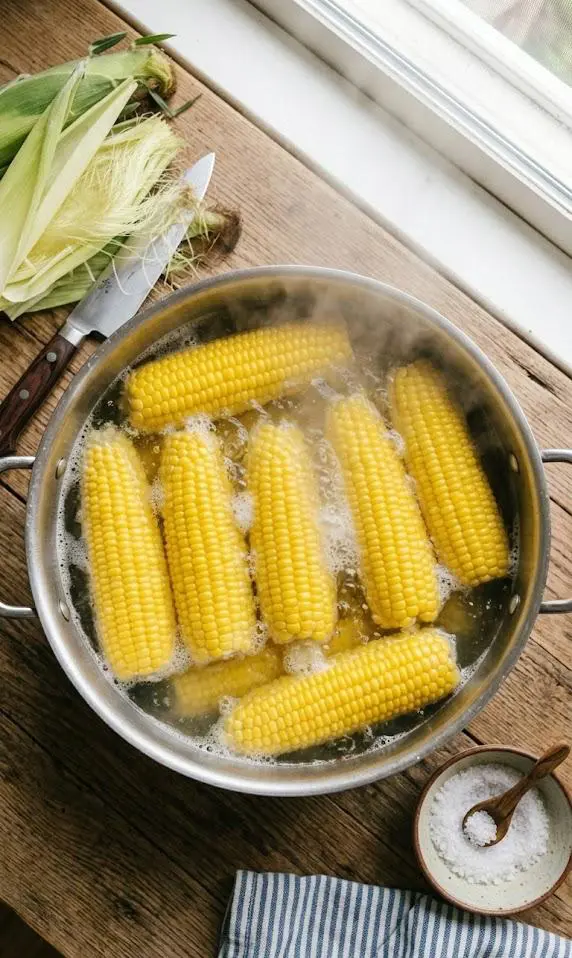
Fill a large pot with enough water to fully cover all the corn. Using a pot that’s too small can lead to uneven cooking.
-
Bring the water to a rolling boil over high heat. You want it bubbling vigorously before adding the corn.
Step 3: Add Corn
-
Carefully place the prepared ears of corn into the boiling water. You can use tongs to avoid splashes.
-
Slightly reduce the heat to maintain a gentle but steady boil. Rapid boiling can bruise kernels.
-
Make sure the corn is fully submerged for even cooking.
Step 4: Cooking Time
-
Fresh corn: Boil for 7–10 minutes. This ensures the kernels are tender and juicy.
-
Older corn or extra-tender preference: Boil for 10–12 minutes. Avoid exceeding this time as overcooking can make the corn mushy and less sweet.
Step 5: Remove and Serve
-
Use tongs to carefully remove each ear from the boiling water.
-
Let the corn drain in a colander for a minute or two.
-
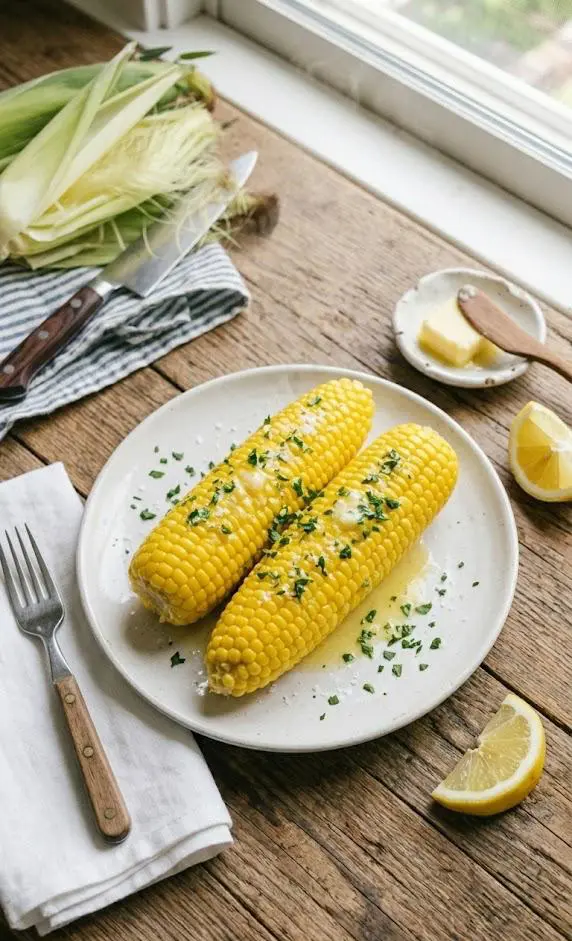
Serve immediately while hot for the best flavor. Top with butter, salt, or your favorite seasoning.
Optional Enhancements
-
Herb Butter: Mix softened butter with chopped parsley, garlic, or cilantro.
-
Spicy Kick: Sprinkle chili powder or smoked paprika for a flavorful twist.
-
Sweet Twist: Drizzle honey or maple syrup for a dessert-like treat.
These simple additions can make boiled corn on the cob a standout dish for any meal.
Common Mistakes to Avoid
-
Overcooking: Corn can become mushy and lose sweetness. Stick to the recommended 7–12 minutes.
-
Boiling with salt: Adds toughness to kernels; season after cooking instead.
-
Not using enough water: Corn needs room to boil evenly. Crowding can result in unevenly cooked corn.
Following these tips ensures perfectly tender, juicy corn every time.
Serving Suggestions
-
Classic: Butter and salt.
-
Grilled Finish: After boiling, grill for 2–3 minutes for smoky flavor.
-
Mexican Style: Sprinkle with lime juice, chili powder, and cotija cheese for a street-food feel.
-
Salad: Slice kernels off and toss with fresh veggies for a vibrant corn salad.
Boiled corn is versatile and pairs well with almost any main dish.
Storing Leftover Corn
-
Refrigeration: Store boiled corn in an airtight container for up to 3 days.
-
Freezing: Blanched corn can be frozen for up to 6 months. Wrap tightly in plastic or use freezer bags.
-
Reheating: Microwave or boil briefly to bring back tenderness before serving.
Conclusion
Boiling corn on the cob is simple, but with a few key tips, you can elevate this humble vegetable into a flavorful, tender treat. From choosing the freshest corn to knowing the exact boiling time, each step ensures your corn is perfectly cooked. Don’t forget to experiment with toppings and seasonings to find your favorite combination!
Enjoy summer’s sweet bounty with perfectly boiled corn on the cob.
Recent posts
Recipe
Recipe
How to Make Shrimp Scampi: A Flavorful and Easy Seafood Classic
Shrimp scampi is a timeless dish that combines tender shrimp with a rich, garlicky butter sauce, often served over pasta or with crusty bread. Known for its simplicity and bold flavor, this dish is perfect for both quick weeknight dinners and elegant...
Recipe
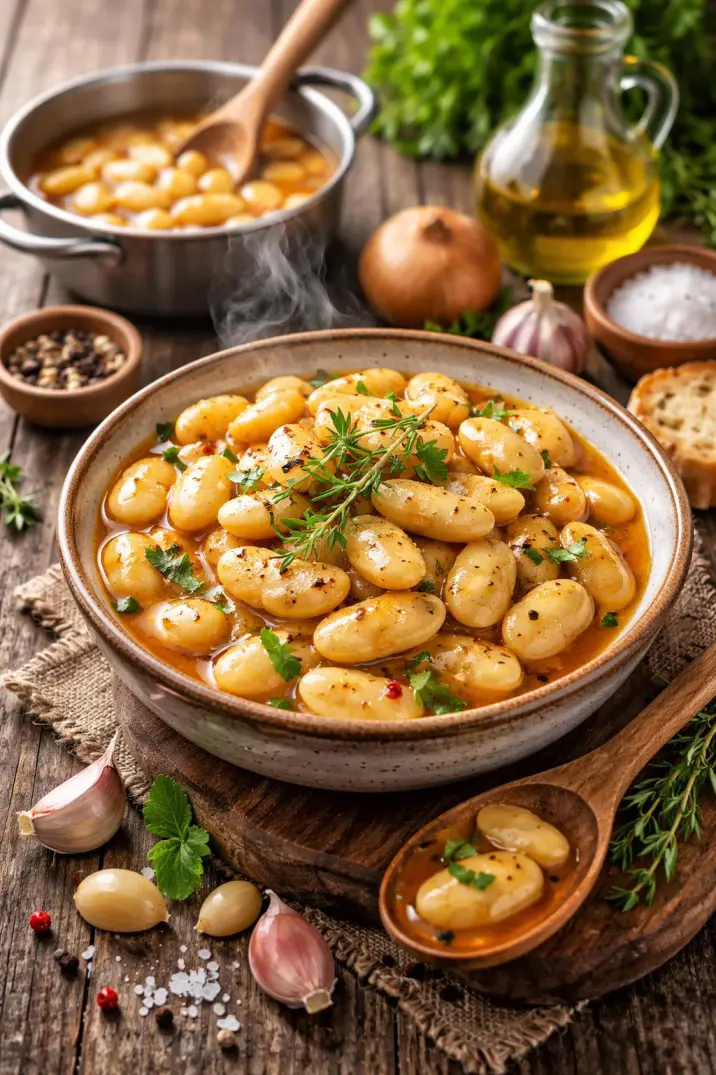
How to Cook Butter Beans | Easy & Flavorful Recipe
Butter beans are a comforting, nutritious staple known for their creamy texture and mild, buttery flavor. Whether you’re preparing a hearty side dish or a plant-based main course, learning how to cook butter beans properly can elevate your meal...
Recipe
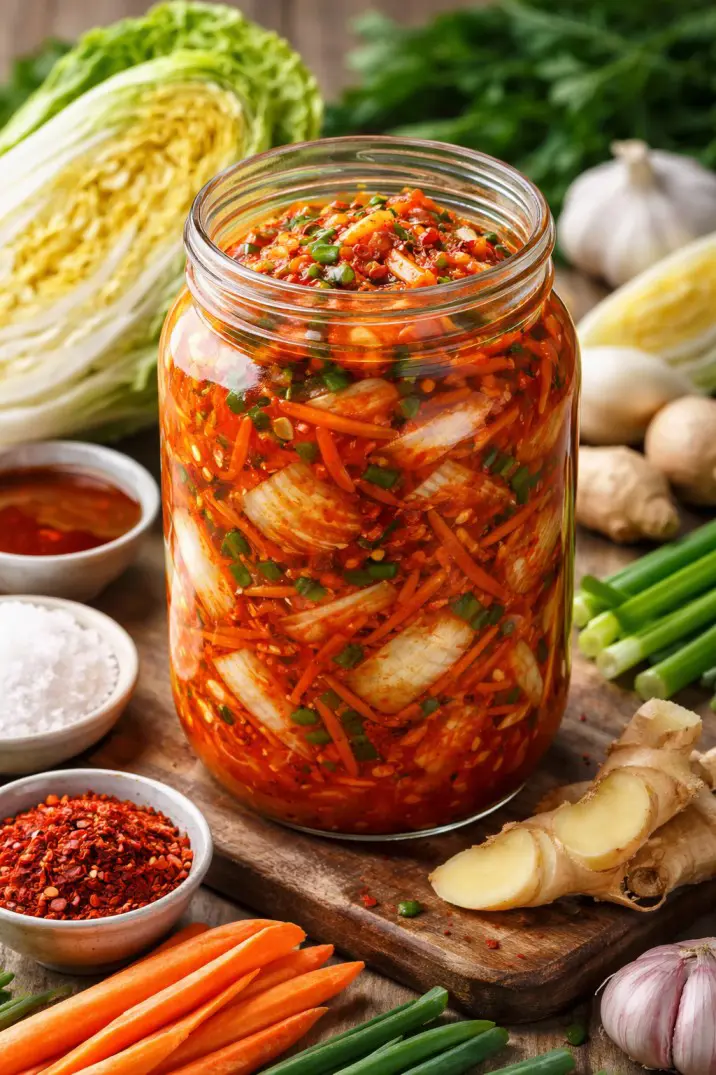
How to Make Kimchi at Home
Kimchi, the iconic Korean fermented dish, is celebrated for its spicy, tangy, and umami-rich flavor. It is not just a side dish but a cultural staple, packed with vitamins, probiotics, and health benefits. Making kimchi at home may seem intimidating,...
Recipe
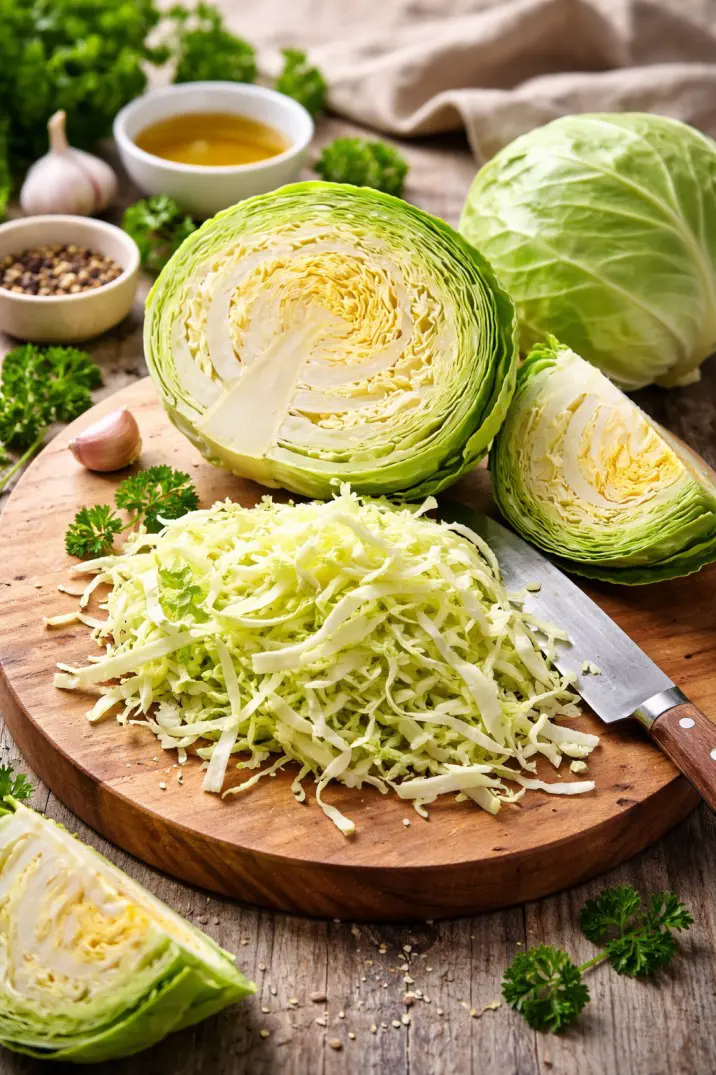
How to Cook Cabbage: Easy, Delicious, and Healthy Recipes
Cabbage is a versatile, nutritious, and affordable vegetable loved in kitchens worldwide. Whether you enjoy it as a side dish, in soups, or as a main ingredient in salads, learning how to cook cabbage properly can elevate its taste and preserve its n...
Recipe
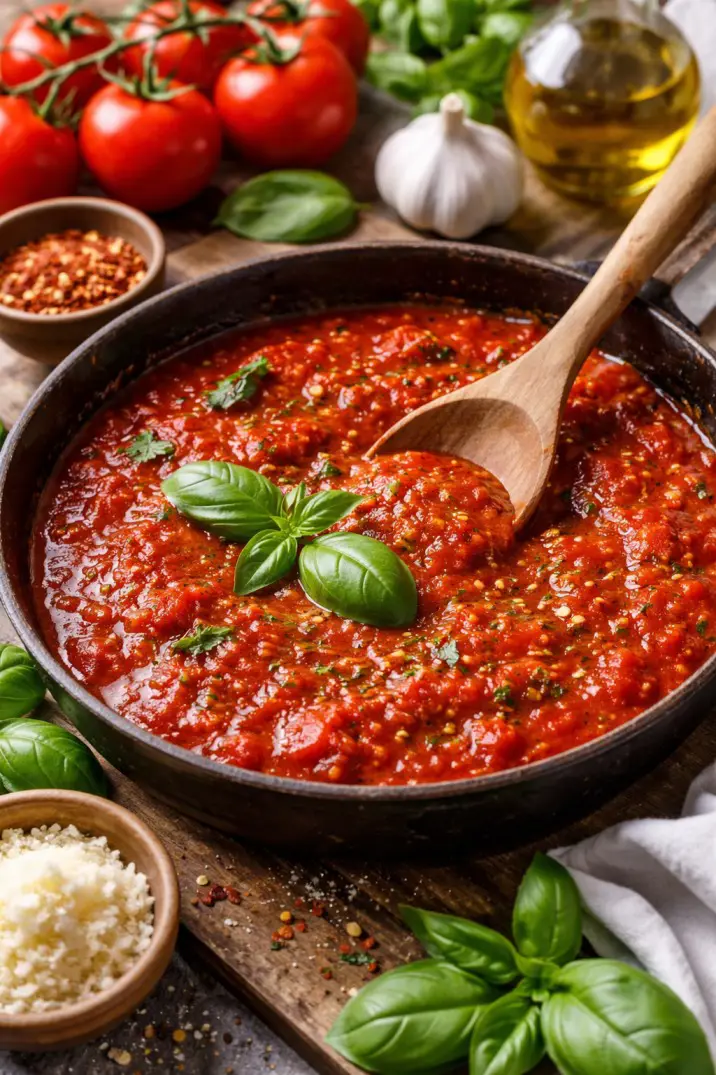
Easy Homemade Pasta Sauce Recipe
Nothing beats the taste and aroma of a fresh, homemade pasta sauce. While store-bought jars are convenient, making your own sauce lets you control the ingredients, flavor, and consistency. Homemade pasta sauce is not only healthier - free from preser...
Recipe
Homemade Hamburger Helper Recipe: A Creamy One-Pan Comfort Meal
If you’re looking for a quick, hearty, and family-friendly dinner, a homemade hamburger helper recipe is the perfect solution. This classic comfort dish combines ground beef, pasta, creamy sauce, and savory seasonings into one satisfying skille...